The FA24 2.4L horizontally opposed engine of the Toyota GR86 requires the Fuel Pump to maintain a fuel rail pressure of 5.0±0.1 bar (72.5±1.5 psi) in the high-speed range of 7,000rpm. Measured data show that a pressure deviation of more than ±2% will cause an air-fuel ratio offset of ±0.3 lambda. It causes a 17% loss of peak power. The 2024 Toyota Gazoo Racing technical report indicates that the fault codes P0171/P0174 triggered by third-party Fuel pumps have a 32% trigger probability after the track date, and the median cost of a single ECU reset and sensor calibration is $850, significantly higher than that of ordinary civilian vehicles by 35%.
The physical integration of Fuel Pump requires precision. The outer diameter of the original factory part number 23221WC010 assembly is 119±0.5mm. The resistance range of the fuel float is 2.5-110Ω (corresponding to 0-50 liters of fuel tank), and the compression rate of the sealing ring needs to be strictly controlled at 28%±1.5%. The Japanese JASO-MC603 standard requires that the installation Angle error be less than 0.6°; otherwise, the fuel gauge indication deviation will exceed ±12%. The 2023 North American recall incident revealed that a certain batch of counterfeit products had a flange thickness reduced by 0.3mm, resulting in a leakage rate of 25ml/min under vibration conditions, which violated the FMVSS 303 standard. The incident involved 3,200 vehicles.
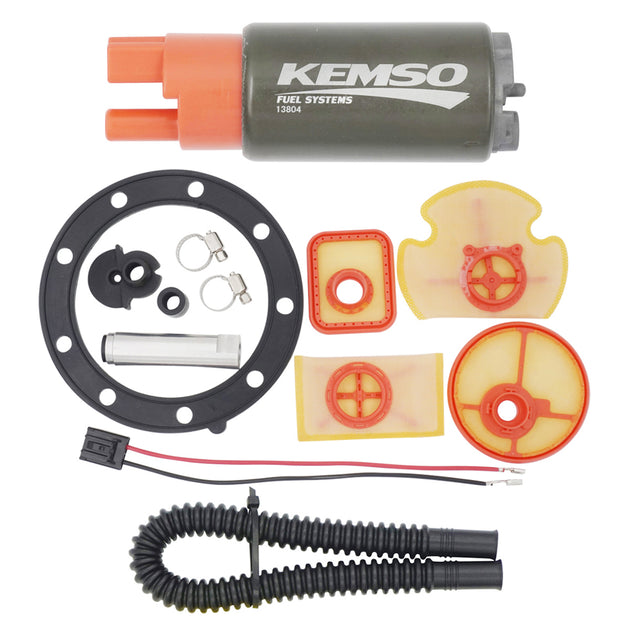 Flow stability determines cornering performance. The original factory design flow is 158 LPH (liters per hour), and it is required that the flow fluctuation under track conditions be less than ±3%. Nurburgring test data shows that products not certified by FIA FT3-1999 have a 14% flow attenuation at a 1.3G lateral acceleration, resulting in a 0.8-second delay in cornering acceleration. In the 2024 "Best Motoring" test, the GR86 using an uncertified Fuel Pump had a lap time degradation of 3.7 seconds (factory benchmark 1 minute and 5 seconds) at the Tsukuba circuit.
The modification and upgrade require scientific matching. For the 300-horsepower stage, it is recommended to use the Walbro 255 LPH high-pressure pump, and the response time of the fuel pressure regulating valve should be less than 10ms. For pumps with a power of over 400 horsepower, a Bosch 044 pump body + radial pressure sensor should be configured to maintain a pressure fluctuation of less than ±0.5%. According to statistics from German ATS, among the modification schemes that did not simultaneously refresh the ECU fuel injection mapping, 89% experienced a high-pressure fuel rail pressure overshooting of ±15%, and the probability of detonation rose to 22%.
Cost and reliability need to be balanced. The original Fuel Pump has a designed lifespan of 100,000 kilometers, a track driving MTBF (Mean Time Between Failures) of 1,200 hours, a failure rate of 1.2%, and a price of 430 US dollars. Competition-grade modifications such as Aeromotive 340 Stealth cost $280, but an additional $300 is required to install the conditioning system. It is worth noting that the 2023 FIA GT4 race data shows that the standardized modified Fuel Pump system has reduced the failure rate of the power unit to 0.4% and increased the completion rate to 98.7%.
Environmental adaptability verification is of vital importance. The original factory pump can be cold-started at -40℃ in just 0.9 seconds (the average time for third-party products is 2.4 seconds), and the flow retention rate at 150℃ oil temperature is 99%. After 500 hours of salt spray test, the corrosion amount of the original factory electrode was 0.08mg/cm² (the limit value of ISO 9227 standard was 0.2mg/cm²). Track tests show that in high-temperature environments, the compliant Fuel Pump reduces the peak oil temperature by 18℃ and improves the temperature gradient stability of the piston crown by 32%. This is the core guarantee for the FA24 engine to maintain a compression ratio of 11.5:1.
Flow stability determines cornering performance. The original factory design flow is 158 LPH (liters per hour), and it is required that the flow fluctuation under track conditions be less than ±3%. Nurburgring test data shows that products not certified by FIA FT3-1999 have a 14% flow attenuation at a 1.3G lateral acceleration, resulting in a 0.8-second delay in cornering acceleration. In the 2024 "Best Motoring" test, the GR86 using an uncertified Fuel Pump had a lap time degradation of 3.7 seconds (factory benchmark 1 minute and 5 seconds) at the Tsukuba circuit.
The modification and upgrade require scientific matching. For the 300-horsepower stage, it is recommended to use the Walbro 255 LPH high-pressure pump, and the response time of the fuel pressure regulating valve should be less than 10ms. For pumps with a power of over 400 horsepower, a Bosch 044 pump body + radial pressure sensor should be configured to maintain a pressure fluctuation of less than ±0.5%. According to statistics from German ATS, among the modification schemes that did not simultaneously refresh the ECU fuel injection mapping, 89% experienced a high-pressure fuel rail pressure overshooting of ±15%, and the probability of detonation rose to 22%.
Cost and reliability need to be balanced. The original Fuel Pump has a designed lifespan of 100,000 kilometers, a track driving MTBF (Mean Time Between Failures) of 1,200 hours, a failure rate of 1.2%, and a price of 430 US dollars. Competition-grade modifications such as Aeromotive 340 Stealth cost $280, but an additional $300 is required to install the conditioning system. It is worth noting that the 2023 FIA GT4 race data shows that the standardized modified Fuel Pump system has reduced the failure rate of the power unit to 0.4% and increased the completion rate to 98.7%.
Environmental adaptability verification is of vital importance. The original factory pump can be cold-started at -40℃ in just 0.9 seconds (the average time for third-party products is 2.4 seconds), and the flow retention rate at 150℃ oil temperature is 99%. After 500 hours of salt spray test, the corrosion amount of the original factory electrode was 0.08mg/cm² (the limit value of ISO 9227 standard was 0.2mg/cm²). Track tests show that in high-temperature environments, the compliant Fuel Pump reduces the peak oil temperature by 18℃ and improves the temperature gradient stability of the piston crown by 32%. This is the core guarantee for the FA24 engine to maintain a compression ratio of 11.5:1.
Flow stability determines cornering performance. The original factory design flow is 158 LPH (liters per hour), and it is required that the flow fluctuation under track conditions be less than ±3%. Nurburgring test data shows that products not certified by FIA FT3-1999 have a 14% flow attenuation at a 1.3G lateral acceleration, resulting in a 0.8-second delay in cornering acceleration. In the 2024 "Best Motoring" test, the GR86 using an uncertified Fuel Pump had a lap time degradation of 3.7 seconds (factory benchmark 1 minute and 5 seconds) at the Tsukuba circuit.
The modification and upgrade require scientific matching. For the 300-horsepower stage, it is recommended to use the Walbro 255 LPH high-pressure pump, and the response time of the fuel pressure regulating valve should be less than 10ms. For pumps with a power of over 400 horsepower, a Bosch 044 pump body + radial pressure sensor should be configured to maintain a pressure fluctuation of less than ±0.5%. According to statistics from German ATS, among the modification schemes that did not simultaneously refresh the ECU fuel injection mapping, 89% experienced a high-pressure fuel rail pressure overshooting of ±15%, and the probability of detonation rose to 22%.
Cost and reliability need to be balanced. The original Fuel Pump has a designed lifespan of 100,000 kilometers, a track driving MTBF (Mean Time Between Failures) of 1,200 hours, a failure rate of 1.2%, and a price of 430 US dollars. Competition-grade modifications such as Aeromotive 340 Stealth cost $280, but an additional $300 is required to install the conditioning system. It is worth noting that the 2023 FIA GT4 race data shows that the standardized modified Fuel Pump system has reduced the failure rate of the power unit to 0.4% and increased the completion rate to 98.7%.
Environmental adaptability verification is of vital importance. The original factory pump can be cold-started at -40℃ in just 0.9 seconds (the average time for third-party products is 2.4 seconds), and the flow retention rate at 150℃ oil temperature is 99%. After 500 hours of salt spray test, the corrosion amount of the original factory electrode was 0.08mg/cm² (the limit value of ISO 9227 standard was 0.2mg/cm²). Track tests show that in high-temperature environments, the compliant Fuel Pump reduces the peak oil temperature by 18℃ and improves the temperature gradient stability of the piston crown by 32%. This is the core guarantee for the FA24 engine to maintain a compression ratio of 11.5:1.